
Rwanda
Welcome to destination Rwanda, a place whose charm goes beyond its a thousand hills and a very clean city. When looking for Rwanda, the only region to find it is in the east-central region. It has Uganda to the north, Tanzania to the east, Burundi to the south and Democratic Republic of Congo to the west. In the 26,338 square kilometers country, there are vibrant cultures, biodiversity, varied landscapes and other physical features.
History of Rwanda
During the height of the monarchy era before Rwanda was founded, Germans came and colonized it in the 1897s. Belgium took over from the Germans in 1916 as soon as world war 1 ended. From 1959 to 1961, there was a revolution in Rwanda, that led to the end of the monarchy system forever. Following this, the country attained its independence from the Belgian administrators in 1962. Rwanda’s darkest time in the post-colonial era happened in 1994, during the Rwandan Genocide.
The hundred days of brutal murders by the Hutus was aimed at the Tutsis and some Hutu sympathizers. Subsequently, 800,000 people lost their lives, with millions of people displaced and so many families shattered. Rwanda’s development was impacted negatively for years. Fortunately, the government started restructuring the society around national unity and accountability. Rapid economic and social reconstruction is ongoing, especially under the sitting President, Paul Kagame.
Best Rwanda Destinations
Volcanoes National Park
What is the location of Volcanoes? Volcanoes National Park is situated in northwest Rwanda at...Continue reading→
Nyungwe Forest National Park
When you are on the border with Burundi, you will see Nyungwe National Park in...Continue reading→
Akagera National Park
Akagera National Park is Rwanda’s premier savannah national park because it contains all the big...Continue reading→
Gishwati Mukura National Park
Gishwati Mukura national park is situated in the North Western part of Rwanda approximately 150...Continue reading→
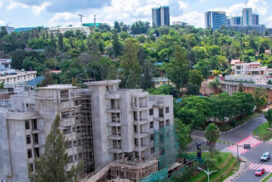
Kigali City
Kigali is the capital city of Rwanda situated at the centre of the country surrounded...Continue reading→
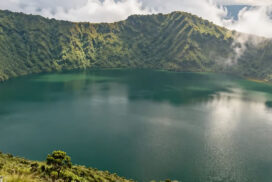
Mt. Bisoke
Mountain Bisoke is a dormant volcano located in Musanze district in the Kinigi sector of...Continue reading→
The Twin lakes of Rwanda
Rwanda’s twin lakes are located in the North Western part of Rwanda along the Virunga...Continue reading→
What are the major attractions in Rwanda?
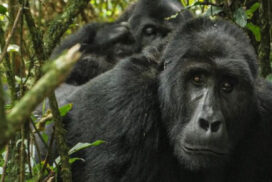
Travel to the northwest of Rwanda where Volcanoes National Park is situated on 160 square kilometers of land. It has its borders with Mgahinga National Park in Uganda and Virunga National Park in Democratic Republic of Congo. All 3 of them are in the Virunga Conservation Area, with volcanic ranges towering each of them. In Volcanoes National Park, there are 5 volcanoes out of 8, i.e. Karisimbi, Bisoke, Gahinga, Muhabura and Sabinyo.
In 1925, the park was established and today 115 mammal species and 200 bird species are sheltered. Among the mammals, 12 are primate species including mountain gorilla, golden monkey, L’hoest’s monkeys, blue monkeys, bush babies and red-tailed monkeys. Birds hiding there are dusky crimson wing, Grauers swamp warblers and hooded vultures etc. Tours offered include luxury gorilla trekking, golden monkey trekking, birdwatching, nature walks and hiking.
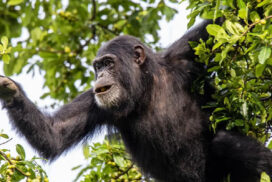
You have to travel to southwest Rwanda to access the 1,019 square kilometers Nyungwe National Park at the border with Burundi. Officially, it was in 2004 when Nyungwe became a national park and situated between 2 iconic river basins—Congo and Nile. One of the best natural montane afromontane forests in Africa, Nyungwe has 88 mammal species and 345 bird species. It has 13 primate species including silver monkey, red-tailed monkey, chimpanzee, L’hoest’s monkey, grey-cheeked mangabey, Angolan colobus and olive baboon. Albertine endemic bird species are 29.
Birds there are Shelley’s crimson wing, black-faced apalis, African dusky fly-catcher, mountain buzzard, blue-headed sunbird and African fish eagle etc. Chimpanzee trekking, birdwatching and hiking tours are major activities in Nyungwe National Park. Equally exciting are canopy walk, zip-lining, nature walk, hiking and colobus monkey trekking. Just outside, tea plantation tours can be done in the local communities.
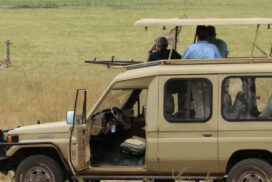
In the east, at the border with Tanzania, Akagera is a 1,122 square kilometers savannah national park. Akagera was established as a park in 1934 as the only one of its kind in Rwanda. Breathtaking physical features to capture on your camera include Lakes Ihema, Mihindi, Hago, Shakani and Rwanyakazinga. Woodland and grassland savannah also offer attractive views. This is intimately witnessed during the walk the line experience.
Viewing the savannah mammals and birds is so enjoyable while staring at them through the popup roof of a safari vehicle. When you are at Lake Ihema inside the park, it is better you do a boat cruise. This is an opportunity to take in the presence of hippos and crocodiles among several other mammals, reptiles, birds and fish. With your live bait attached to a fishing hook, enjoy sport fishing while relaxed on your motorboat just above Lake Shakani.
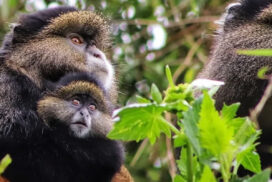
Like Volcanos, Gishwati-Mukura National Park is in the northwest of destination Rwanda, sitting on 34.3 square kilometers. This Afromontane destination attained national park status in 2016, combining Gishwati and Mukura forest reserves. Its mammal species includes chimpanzees, L’hoest’s monkeys, large spotted genets, side-stripped jackals, serval cats, African palm civets, black-fronted duikers and tree hyraxes.
The number of birds per species has been recorded at 232 as of now, and several are yet to be discovered. Out of these 20 are Albertine endemic species. Turacos like great blue, Rwenzori and black-billed are common in the forests. Other birds are strange weaver, Rwenzori apalis, regal sunbird, narina trogon and red-throated alethe etc. Chimpanzee trekking, birding, hiking, village visits and nature walks are some of the activities to do.
One of the African Great Lakes is Kivu, shared by Rwanda and Democratic Republic of Congo along the border. Moreover, its location in the Albertine Rift region makes this freshwater lake full of biodiversity. The surface area of Lake Kivu is 2,370 square kilometers, making it the largest lake in Rwanda. More than 185 species of birds have been recorded at Lake Kivu, including its Islands and the surrounding areas.
Boat cruises and bird watching are the major activities at Lake Kivu. Birdlife at Kivu are little bittern, black and white manikin, northern grey-headed sparrow, little egret, and red-faced cisticola. Hiking tours are offered to admire Islands like Napoleon, Nyenyeri and Amahoro. There are also vistas of volcanoes, Nyiragongo and Nyamulagira while hiking at Lake Kivu. You can also visit coffee plantations to learn how the cash crop is grown and processed for export.
Is Rwanda a Safe Destination to visit?
Yes, Rwanda is so safe for travelers because of a combination of factors. First is the security that is tightened by a capable army, that has maintained peace and stability for decades now. High stakes criminality are almost unheard of thanks to the police and other law enforcement bodies. Safari destinations are under the protection of armed rangers, while other destinations are protected by police or private security. With strict rules or regulations that govern primate trekking and experiences like game drives, adherence to them ensures protection against wildlife attacks.
Nevertheless, just like every part of this world having human beings, you cannot fail to have some horrible ones. They might steal your luggage with or without your knowledge. To avoid this, you need to stay vigilant, and consider moving with a tour guide. Doing this helps in avoiding dangerous spots. Also, travel while medically insured and with mosquito repellents to avoid mosquito bites since Rwanda has a lot of the malaria-spreading ones.
What is the best time to visit Rwanda?
A visit to destination Rwanda is best done in the dry season if you are interested in outdoor experiences. These include gorilla treks, chimpanzee treks, colobus monkey treks, golden monkey treks, hiking tours, boat cruises, game drives and nature walks. Your visit for these activities should then be done from June to September and December to February. Safari destinations in Rwanda can now be accessed on less muddy roads and trails for you to feel confident while moving.
Dry season rainfall does not occur as much, thus vegetation is much reduced to ensure full visibility of animals. On the other hand, when it rains less, the vegetation is not lush thus birds cannot be attracted to the country’s safari destinations. That is why you should do birdwatching in the wet season, from October to May. Numerous migratory and hundreds of resident birds find the habitats convenient for breeding during this period.
Why Visit with us?
The right partner to visit Rwanda with is a reputable and local tour operator like Chanan Africa Safaris. Your security and safety concerns are partly addressed when you travel with professional guides, who understand the local conditions including languages. They are absolutely the best at driving you to each and every destination in Rwanda. With all the knowledge they have, you get all the necessary information during your journey.
Your transfer between destinations is as flawless as they get, while inside any of our classy 4X4 safari land cruisers. Meanwhile, we have a team dedicated to consistently communicate with you and the accommodations to stay in the destinations. Regarding accommodations, we hand-pick the very best, ensuring that each suits your budget, yet very comfortable. Right now you can contact us to plan a tour and have memorable moments in destination Rwanda.